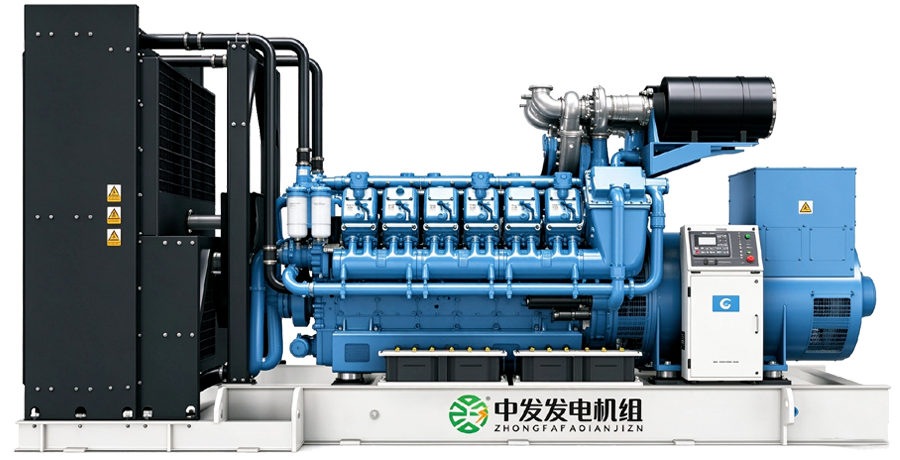

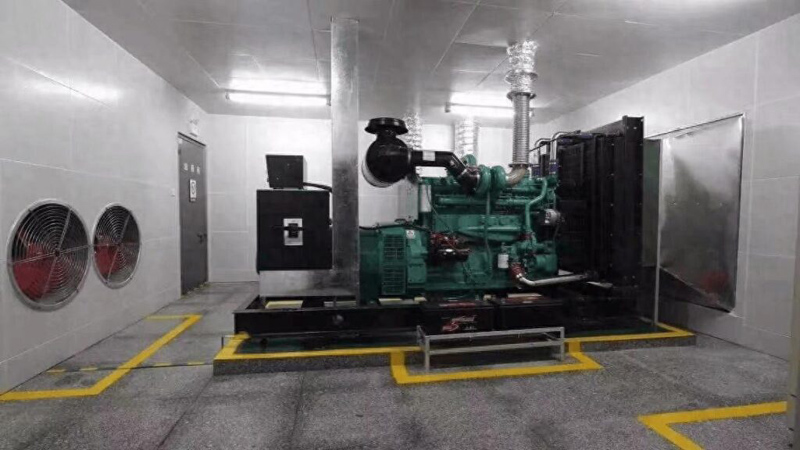
During the construction of the diesel generator room, problems inconsistent with specification requirements frequently occur. If these issues are not resolved in a timely manner, they may impair the normal operation of the generator room and even create potential safety hazards. The following details common construction defects and corresponding standard practices.
1. No Vibration Isolation Measures for the Generator
Code for Electrical Design of Civil Buildings (Clause 6.1.11) clearly stipulates that vibration isolation measures shall be adopted for the unit foundation. Where the foundation is installed inside the main building or basement, resonance with the building must be prevented. Nevertheless, effective vibration isolation measures are omitted for some generators in practical construction.
Foundation Type Selection: For sites with loose requirements on vibration and noise, reinforced concrete foundations may be adopted and cast directly on the concrete slab. If the surrounding buildings lie in noise-sensitive areas, isolated vibration-isolating foundations shall be used to reduce the impact of vibration noise on buildings. No rigid connection shall exist between the foundation and the generator room.
Vibration Isolator Selection: For low-power generators, integrated built-in rubber vibration isolators shall be installed between the generator and the base. For generator sets without integrated built-in isolators, steel spring vibration isolators shall be adopted during installation.
2. Lack of Oil Splash Prevention Measures for the Unit
Oil splashing may occur during diesel engine operation, yet effective oil splash prevention measures are absent in some generator rooms. Specifications require oil immersion prevention facilities for diesel engine foundations; oil drainage trenches may be installed. A slope of 0.3% together with drainage and oil discharge facilities shall be provided within the generator room, trenches and cable trenches. This requirement is often overlooked in field construction.
Floor Treatment: Anti-oil floor paint shall be applied to the generator foundation and the floor of the generator room. A 0.3% slope shall be reserved for smooth discharge of oil contamination.
Oil Sump Arrangement: A 10 cm oil trough shall be arranged around the foundation. Oil pipelines shall be laid inside dedicated trenches filled with fine sand to contain oil spillage.
3. Ordinary Rubber Vibration Pads Installed without Position Limiting Devices
Ordinary rubber vibration pads have flat surfaces, different from corrugated SD rubber vibration pads in multi directions. When ordinary rubber vibration pads are used without position limiting devices, the unit may suffer horizontal displacement and disrupt normal equipment operation.
Installation of Limiting Devices: Horizontal displacement limiting measures for the unit shall be fitted at four corners or four sides of the unit.
Vibration Pad Selection: Multi-directional corrugated SD rubber vibration pads or spring isolators with built-in horizontal limiting functions can be used to eliminate the need for additional limiting devices.
4. Ungrounded Generator Neutral Point
The Standard for Electrical Design of Civil Buildings specifies clear requirements for neutral grounding of generators of 1000 V and below. In actual construction, the generator neutral point is sometimes ungrounded or grounded non-compliant. Specific requirements: For a single unit, the generator neutral point shall be directly grounded, and the grounding type of the unit shall match that of the low-voltage power distribution system. When multiple units operate in parallel, the neutral point of each unit shall be grounded via a knife switch or contactor. Meanwhile, the Code for Acceptance of Construction Quality of Building Electrical Engineering stipulates that the neutral point, grounding connection mode and grounding resistance of the generator shall comply with design specifications. Anti-loosening parts for grounding bolts shall be complete and marked.
Standard Practice: Both the low-voltage generator enclosure and neutral point shall be grounded. The neutral N terminal inside the generator terminal box shall be directly connected to the common grounding conductor, or connected via a knife switch per design to meet grounding specifications.
5. Improper Installation of Oil Tanks, Vent Pipes and Other Components inside Buildings against Fire Protection Requirements
Strict fire protection requirements apply to fuel supply pipelines of diesel generators installed inside buildings. In some construction works, oil pipes inside the oil storage room are not hermetically sealed; vent pipes are not equipped with breather valves with flame arrestors; and facilities to contain oil spread are missing below oil tanks.
Oil Tank Installation: The oil tank shall be airtight and fitted with a vent pipe leading outdoors, on which a breather valve with flame arrestor is mounted. A threshold shall be installed with sufficient height to prevent leaked oil from flowing out of the oil storage room.
Floor Treatment: Fine sand or other oil containment measures shall be laid on the floor beneath the oil tank to prevent fire risks caused by oil spreading.
6. Missing Anti-static Grounding for Fuel Equipment and Pipelines
Anti-static grounding measures shall be implemented for fuel system equipment and pipelines, yet such grounding is often omitted or improperly installed in construction.
Grounding Connections: The oil tank and oil pipelines shall be connected to the common grounding conductor. Bonding jumpers shall be fitted at pipe fittings and valves.
Resistance Requirements: In accordance with Code for Acceptance of Construction Quality of Industrial Metal Pipelines, for pipelines requiring static grounding, the resistance between each pair of flanges or other joints shall be ≤0.03Ω. The Code for Design of Building Lightning Protection states that when the transition resistance at connections such as elbows, valves and flanges exceeds 0.03Ω, metal bonding jumpers shall bridge the joints. Flange connections with no less than five bolts may be exempted from bonding in non-corrosive environments.
Stringent compliance with specifications is mandatory throughout the construction of diesel generator rooms. Every procedure shall meet relevant standards to ensure safe and stable operation of the generator room.