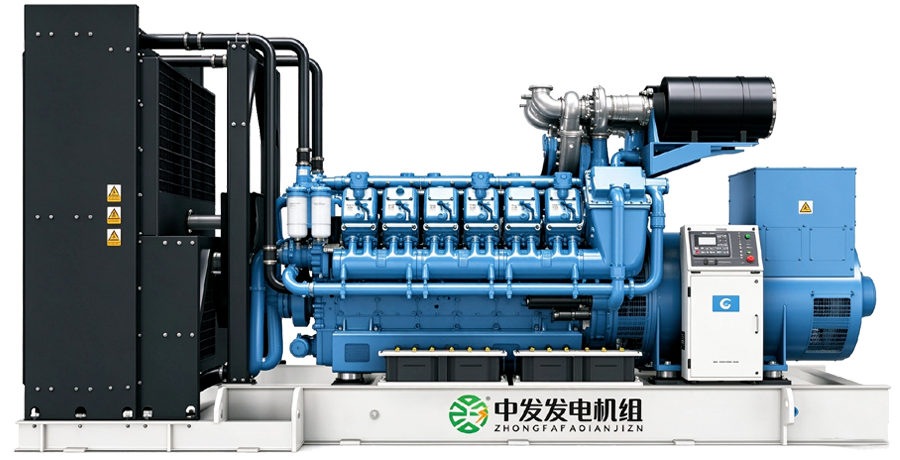

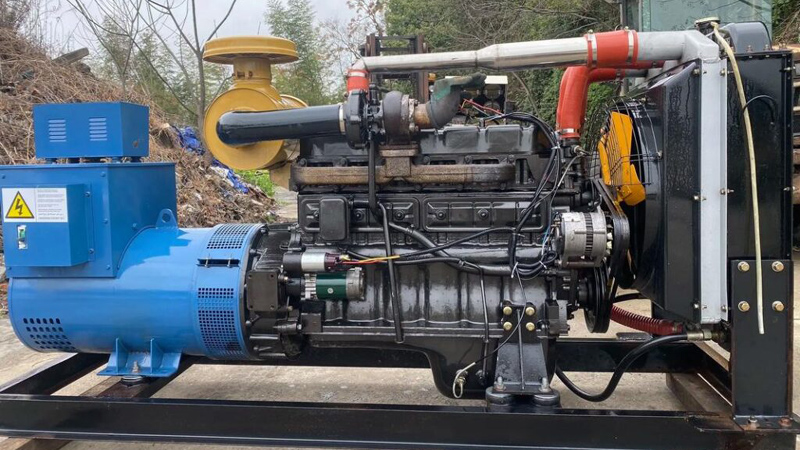
As standby or prime power equipment, diesel generator sets require high quality and reliability. Refurbished units, namely used equipment that has undergone reconditioning, carry potential safety hazards due to aging components and degraded performance. Therefore, identifying refurbished units is a critical step during procurement. Below are professional identification methods provided by diesel generator manufacturers to help buyers avoid risks:
I. Visual Inspection: Traces of Refurbishment Revealed by Details
Housing and Coating: New units feature smooth and even housings free of scratches or repair marks. The coating is uniform in color with no fading or peeling. Refurbished units may show signs of repainting such as uneven color or paint sagging, or obvious repair marks including welding spots and patches.
Markings and Labels: Nameplates, warning labels and serial numbers on new units are clear, intact and neatly printed without wear or alteration. Labels on refurbished units may be blurry, faded or re-stuck with curled edges; serial numbers may be tampered with or missing.
Connecting Components: Bolts and nuts of new units are rust-free and tightly fastened. Cables and pipes are neatly arranged with no aging or damage. Connecting parts of refurbished units may show rust and wear; cable sheaths become hard and cracked, and pipe joints have leakage traces.
II. Internal Structure: Core Components Tell the Truth
Engine and Alternator: The cylinder block, crankcase and other parts of a new engine are free of oil contamination and carbon deposits. The insulation layer of the alternator winding remains intact with no scorch marks. The interior of a refurbished engine may have residual oil and carbon deposits indicating long-term operation. The winding insulation of the alternator may be aged, discolored or patched.
Radiator and Filters: The radiator fins of new units are undeformed and unclogged. Air filters and fuel filters are brand new and unopened. Radiator fins of refurbished units are bent or blocked, impairing heat dissipation. Filters may be cleaned and reused with residual stains on the surface.
Control Panel: Meters on new units deliver clear readings; buttons are responsive and unworn. Control wiring is neatly routed with no risks of aging or short circuit. Refurbished units may have shaky needles or abnormal meter readings, loose or faded buttons, messy wiring, temporary splices or insulation tape wrapping.
III. Performance Test: Operating Data Expose Defects
Start-up Test: New units achieve fast cold start (normally within 1–3 attempts), with stable idle speed and no abnormal noise or vibration. Refurbished units are hard to start and may require multiple attempts or preheating. Idle speed is unstable, possibly accompanied by knocking sounds, blue smoke (oil burning) or black smoke (incomplete combustion).
Load Test: When loaded, new units maintain stable voltage and frequency with fluctuation ≤±1%, and the output power matches the rated value without frequent overload protection tripping. For refurbished units, voltage and frequency fluctuate greatly (≥±5%), output power is far below rated value, or overload protection trips frequently.
Fuel Consumption and Emission: The fuel consumption rate of new units complies with manufacturer standards (e.g., fuel consumption ≤210 g/kW·h for certain diesel engines), with normal light grey or colorless exhaust smoke. Refurbished units consume noticeably more fuel, possibly caused by air leakage from worn piston rings, and emit black or blue exhaust smoke indicating incomplete combustion or engine oil burning.
IV. Documents and After-sales Service: Verify Legitimacy and Warranties
Certificate of Conformity and Warranty Card: New units come with original factory certificates and warranty cards whose information matches the model and serial number of the unit, with a clear warranty period (typically 1–2 years). Refurbished units may have forged or missing certificates, vague warranty information or an overly short warranty (e.g., only 3 months).
Manufacturer Qualifications and Reputation: Reputable manufacturers of new products hold production licenses, ISO certifications and receive favorable customer feedback without numerous complaints. Sellers of refurbished units often provide vague manufacturer information (e.g., no official website or fake address), and heavily promote “low-price sales” or “inventory clearance”.
V. Professional Inspection: Verification by Third-party Institutions
If identification remains inconclusive, entrust a third-party testing institute to carry out a comprehensive inspection. Inspect for cracks or wear on engine cylinder blocks, crankshafts and other components. Verify whether output power, voltage stability and fuel consumption rate meet standards. Query production and maintenance records via the serial number to confirm whether the unit is refurbished.
In short, you get what you pay for. If the quotation is significantly lower than the market average, stay alert to the risk of refurbished units. Check the appearance, internal structure and performance data item by item. Purchase directly from manufacturers or authorized dealers instead of private individuals or unregulated channels.
With the above methods, buyers can effectively distinguish refurbished diesel generator sets and purchase new equipment with reliable quality and stable performance.